There is a moment in making physical things when the screen stops being in charge.
The design is finished. The file is ready. The material is in place. The machine starts moving.
Then the result comes out looking nothing like the clean, confident object you pictured.
That happened with this emblem.
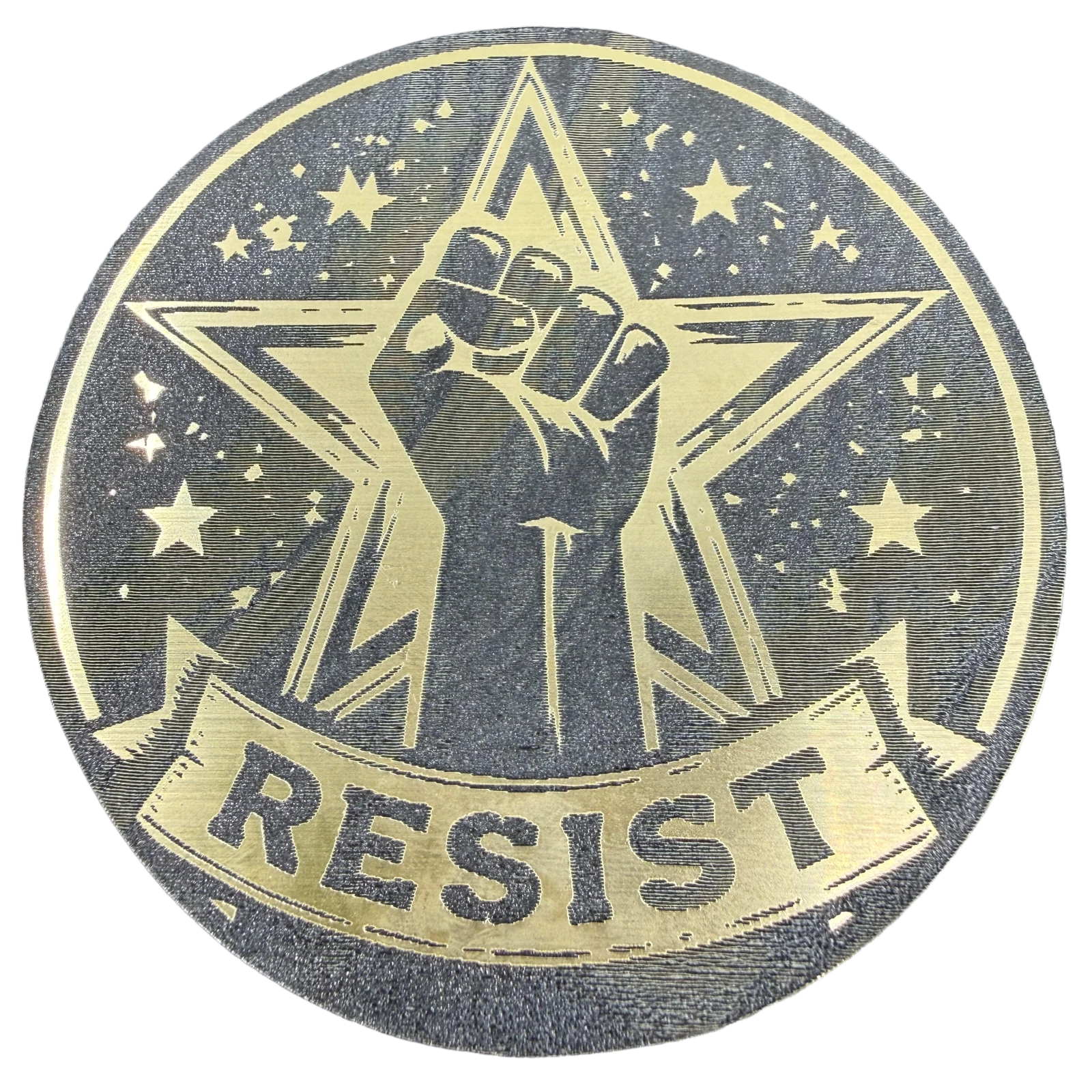
One of my original emblem designs after the machine had other plans. The unexpected result became part of the story—not a product we would pretend was perfect.
This Was a Design I Wanted to Make
The RESIST emblem was not a product-intelligence experiment or a design created to prove a technical theory. It was simply one of my designs—an image I wanted to turn into a physical emblem.
On the screen, the composition was bold and clear: a raised fist, a star, and a direct message.
In production, it became something else.
The surface looked uneven. Details behaved differently across the piece. Areas that should have felt consistent took on their own patterns. It was recognizable, but it was also weird enough to make me stop and ask: What happened here?
Anyone who makes things with machines knows that question.
Manufacturing Has a Sense of Humor
People often imagine digital fabrication as a perfectly predictable exchange:
- Create the design.
- Press the button.
- Receive the object.
Real manufacturing is rarely that polite.
A machine can run beautifully all morning and surprise you in the afternoon. A familiar job can suddenly produce an unfamiliar result. A piece can look right from one angle and completely different when light moves across it.
Sometimes you know immediately what went wrong. Sometimes the answer only appears after testing, comparison, adjustment, and a little staring at the machine.
That is the part of manufacturing most polished product photography leaves out.
The “Bad” Pieces Still Do Work
An imperfect result is frustrating because time, attention, and material went into making it. But it is not empty.
It gives you evidence.
You can hold it. Turn it in the light. Compare one area with another. Look at what stayed strong and what became noisy. Decide whether the next attempt needs a small adjustment or a completely different approach.
The piece may never become something we sell, but it still earns a place in the process.
It becomes a record of what the machine actually did—not what we expected it to do.
You Learn the Machine by Making
There is no substitute for running real work.
You can plan carefully. You can prepare. You can build a repeatable process. You can still end up holding an object that makes you laugh, swear, or start asking better questions.
That does not mean the work is careless. It means physical production has variables, and experience is built by responding to them.
The relationship becomes a cycle:
- make the piece,
- inspect the result,
- identify what changed,
- adjust,
- and make again.
Over time, the surprises become less mysterious. Your eye gets sharper. Your standards become more specific. You learn when a piece is genuinely good and when you are only tempted to call it good because you worked hard on it.
Quality Includes Knowing What Not to Ship
Building a physical-product company is not only about creating successful pieces. It is also about recognizing the ones that do not meet the standard.
This emblem can be interesting, photographable, and worth discussing without being a finished product we would send to a customer.
That distinction matters.
Showing a manufacturing mishap is not the same as lowering the bar. It is being honest about the work required to reach it.
The customer should receive the result of the learning—not be asked to accept the learning piece.
The Messy Middle Is Where the Company Gets Built
State of Stick is built around physical objects, so our progress does not happen only in code, plans, or presentations. It happens at the machine, at the worktable, and in the moment we decide whether something is ready.
Some days produce a beautiful finished emblem.
Other days produce this.
Both days move the company forward.
The perfect pieces show what we can make. The strange ones teach us how to make the next piece better.
And sometimes the machine having other plans is exactly the reminder we need: manufacturing is not magic, and it is never just pressing a button.