A civic field note
Yesterday, on Friday, July 31, 2026, I voted early in Michigan. I left feeling grateful for the people who make elections work, and curious about something State of Stick, Co. thinks about every day: how physical systems earn trust.
I voted yesterday during Michigan’s early voting period for the August 4, 2026 election.
That is a simple sentence, but it carries a lot.
It means there was a place ready for me to go. People were trained. Ballots were prepared. Equipment was set up. Rules were followed. A physical process had to work clearly enough that I could walk in, participate, and leave with confidence that my vote had been received.
I was not thinking about parties when I walked out.
I was thinking about trust.
For the past several months, I have been building State of Stick, a platform for authenticated physical products, connected experiences, and trust-aware records. The public white paper explains the broader retail and product framework, but the underlying idea is bigger than retail:
Physical systems need ways to carry identity, authority, context, and evidence without asking people to trust a black box.
Voting Is a Physical System Before It Is a Political Argument
We talk about elections like they are mostly debates, campaigns, polls, and results. But when you actually vote, the experience is beautifully physical.
There is a check-in. A ballot. A private space. A marked choice. A tabulator. A record. A chain of responsibility.
Every step depends on human care, public rules, physical materials, and shared confidence. The strength of the system is not that it feels magical. The strength is that it is observable, bounded, and administered by people in communities.
That matters.
The future of voting should not be built around replacing that trust with something invisible. It should be built around helping more people understand, protect, and verify the physical systems that already make voting possible.
The Same Question Keeps Showing Up
At State of Stick, Co., we spend a lot of time with one question:
Can we trust that this physical thing is actually what it claims to be?
That question can apply to a product, a collectible, a bottle, a service record, a medical device, a credential, a piece of equipment, or a limited-edition object.
The object changes.
The trust problem keeps returning.
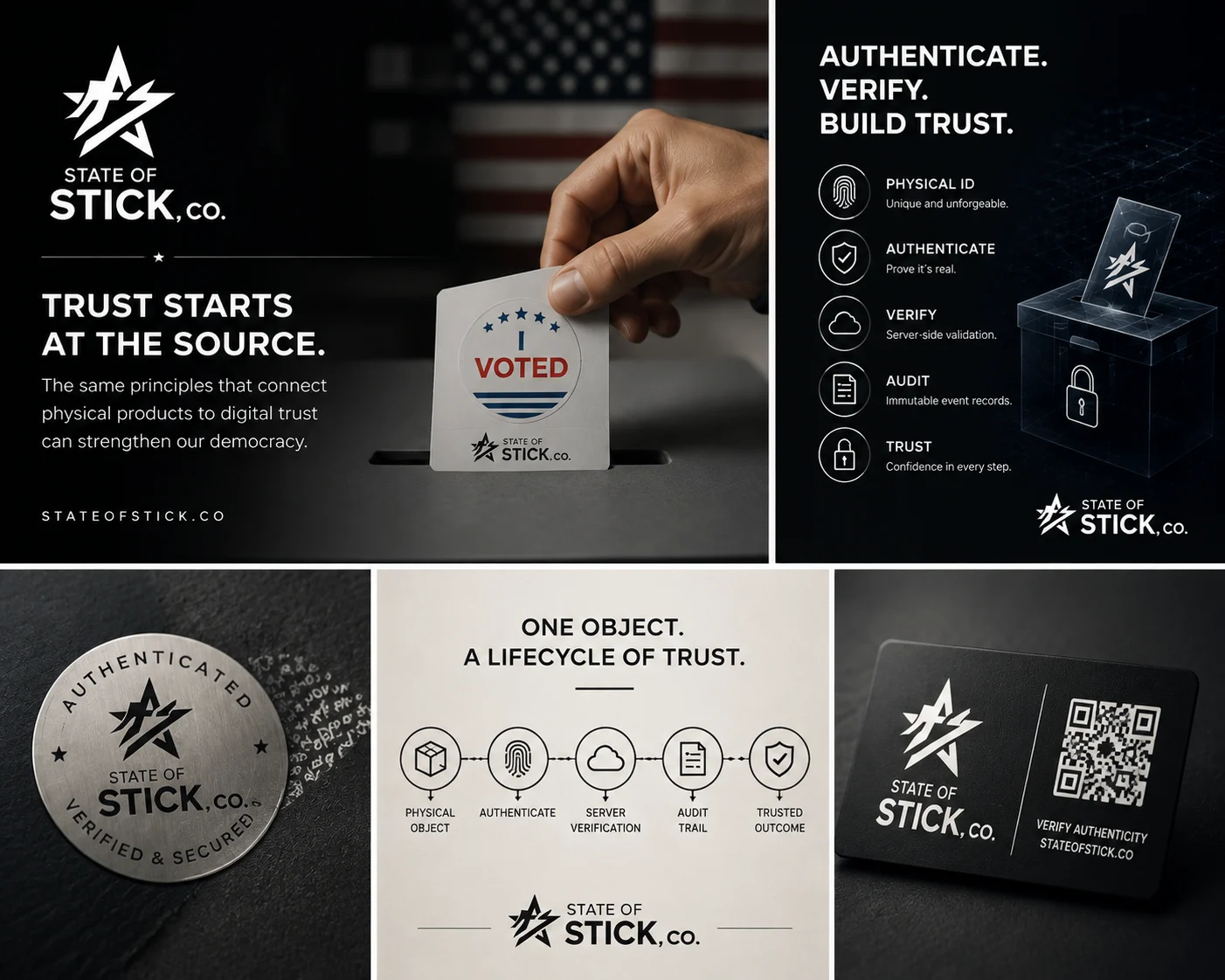
That does not mean elections should be treated like consumer products. They should not. Voting is a public right, and the bar for access, privacy, security, auditability, and neutrality is much higher than almost anything a private company builds.
But the design pattern is worth studying: physical object, persistent identity, trusted process, clear record, appropriate access, and honest language about what has and has not been proven.
Near Field Technology Should Be Thoughtful, Not Flashy
Near field technology is often introduced in the most boring way possible: tap this tag, open this link.
That undersells the bigger idea.
The impressive part is not the tap. The impressive part is what can happen when a physical object, place, or piece of equipment has a trusted digital relationship attached to it.
In an election context, that does not have to mean voting by phone. It does not have to mean putting technology inside a marked ballot. It definitely does not mean replacing paper, local administration, public oversight, or post-election audits with a shiny new interface.
The better questions are more careful:
- Could physical election materials carry stronger internal identity and custody records?
- Could seals, supply kits, equipment cases, signage, training materials, or accessibility tools be easier for authorized workers to verify?
- Could voters receive clearer, official, location-specific guidance from trusted physical touchpoints?
- Could public-facing systems explain what was checked without exposing private voter choices?
- Could election workers spend less time fighting uncertainty and more time helping people vote?
Those are not product claims. They are design questions.
And design questions matter when the system being designed has to serve everyone.
Protect the ritual
The physical act should remain understandable, accessible, and auditable.
Authenticate the support layer
Materials, kits, equipment, instructions, and records can carry stronger identity without changing the private vote.
Explain the boundary
People should know what a system verifies, what it does not verify, and who has authority over the record.
Trust Is Not the Same as Surveillance
This is the line that has to stay bright.
More technology does not automatically mean more trust. Sometimes it means more opacity. Sometimes it creates new risks. Sometimes it solves one problem while quietly creating five more.
Voting systems have to protect privacy by default. A person should never need to trade secrecy for convenience. A civic system should not turn participation into tracking, profiling, advertising, or unnecessary data collection.
So if near field technology ever belongs in more civic infrastructure, it should be used with restraint:
To identify objects, not voters.
To support official information, not persuasion.
To strengthen chain-of-custody records, not expose private choices.
To help people understand the process, not make the process harder to audit.
That is the kind of restraint we try to practice in our own work. Our Trust & Privacy page explains the public promise, the documentation separates standard connected experiences from verified interactions, and the technical overview describes how verification works without publishing sensitive implementation details.
A connected experience is not automatically proof of authenticity. A successful tap does not magically answer every question. A trustworthy system has to say what it knows, what it checked, what it does not know, and what should happen next.
Trust isn't an election problem.
It's a manufacturing problem.
It's a healthcare problem.
It's a defense problem.
It's a supply-chain problem.
Elections simply remind us why trusted physical systems matter.
The Human Part Still Matters Most
The most hopeful thing about early voting was not the technology.
It was the ordinary competence of the moment.
People showed up. Workers helped. The process moved. The room was quiet, practical, and serious in the way public life should sometimes be serious.
That feeling is worth protecting.
When we imagine the future of trust infrastructure, the goal should not be to remove people from the loop. The goal should be to support the people who keep the loop honest.
Good systems help responsible humans do their work with less confusion, better records, clearer permissions, and fewer ambiguous moments. They make the right action easier without hiding the reasoning behind it.
What This Has To Do With State of Stick, Co.
State of Stick, Co. is not an election company.
We are building a platform for trusted physical objects: products that can carry persistent identity, connected experiences, provenance, customer education, service records, ownership moments, and verification-aware next steps when the use case calls for it.
But voting reminded me why that work feels bigger than stickers, emblems, or NFC.
The world is full of physical systems that depend on trust.
Some are commercial. Some are cultural. Some are civic. Some are deeply personal.
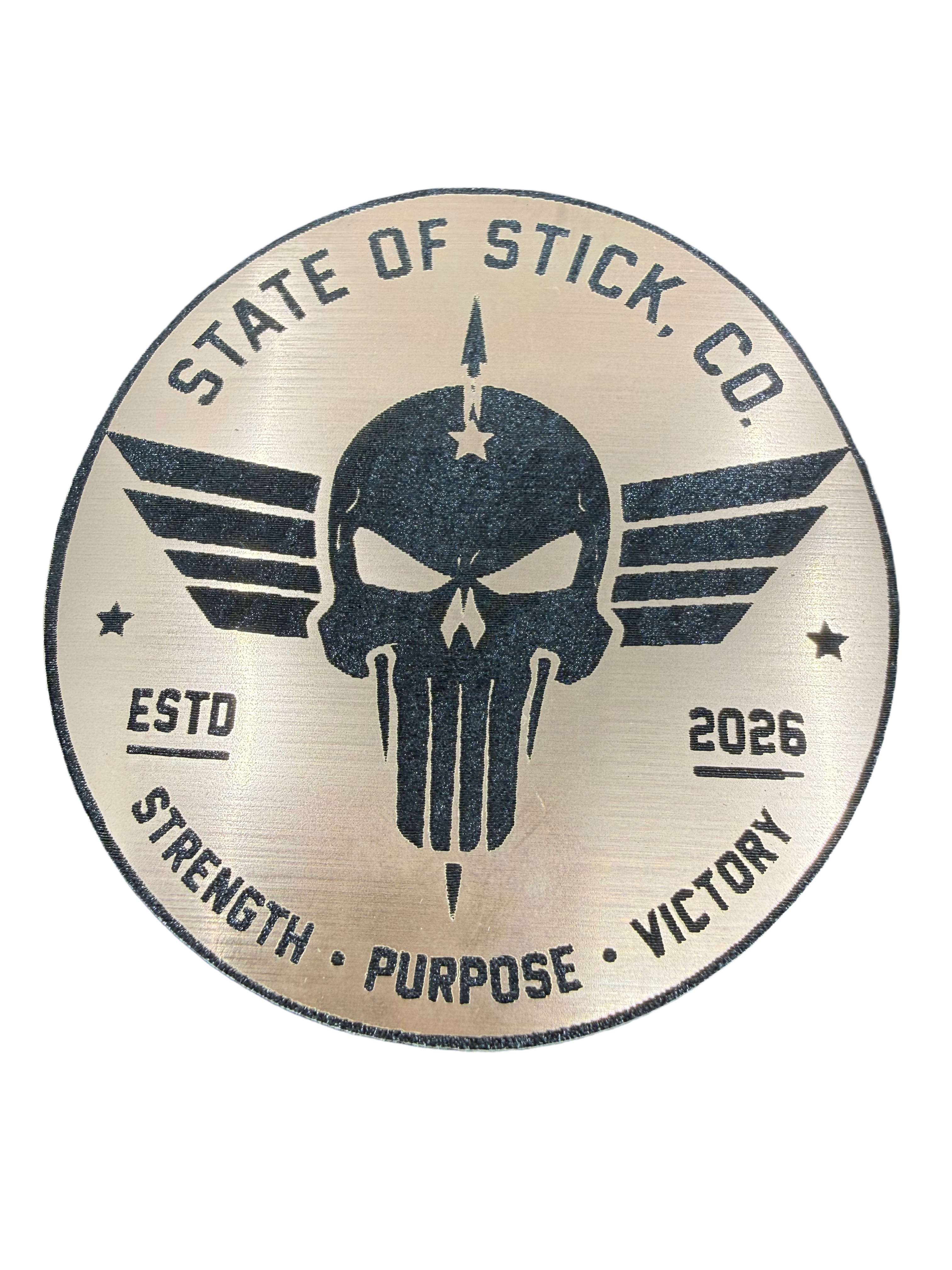
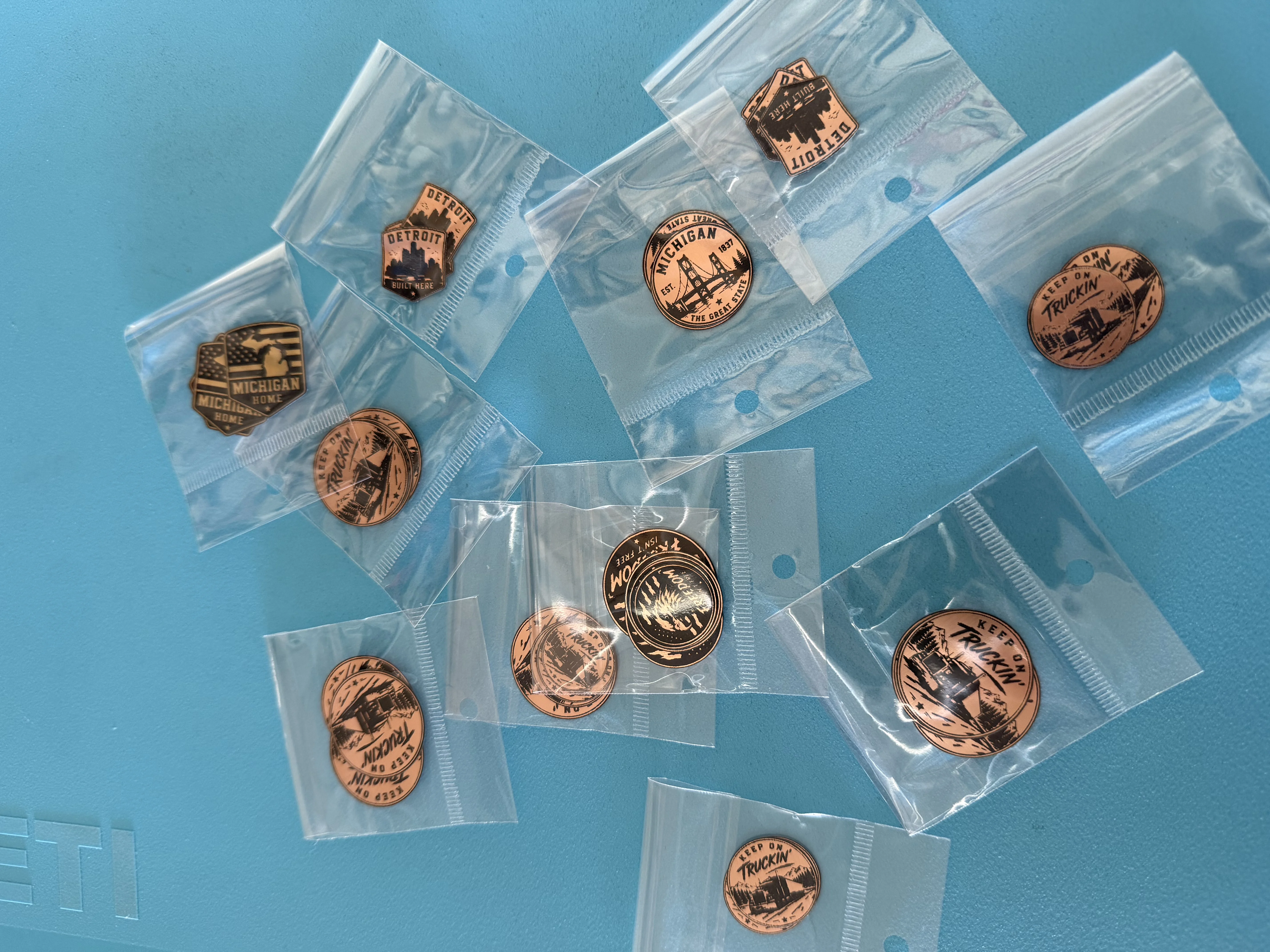
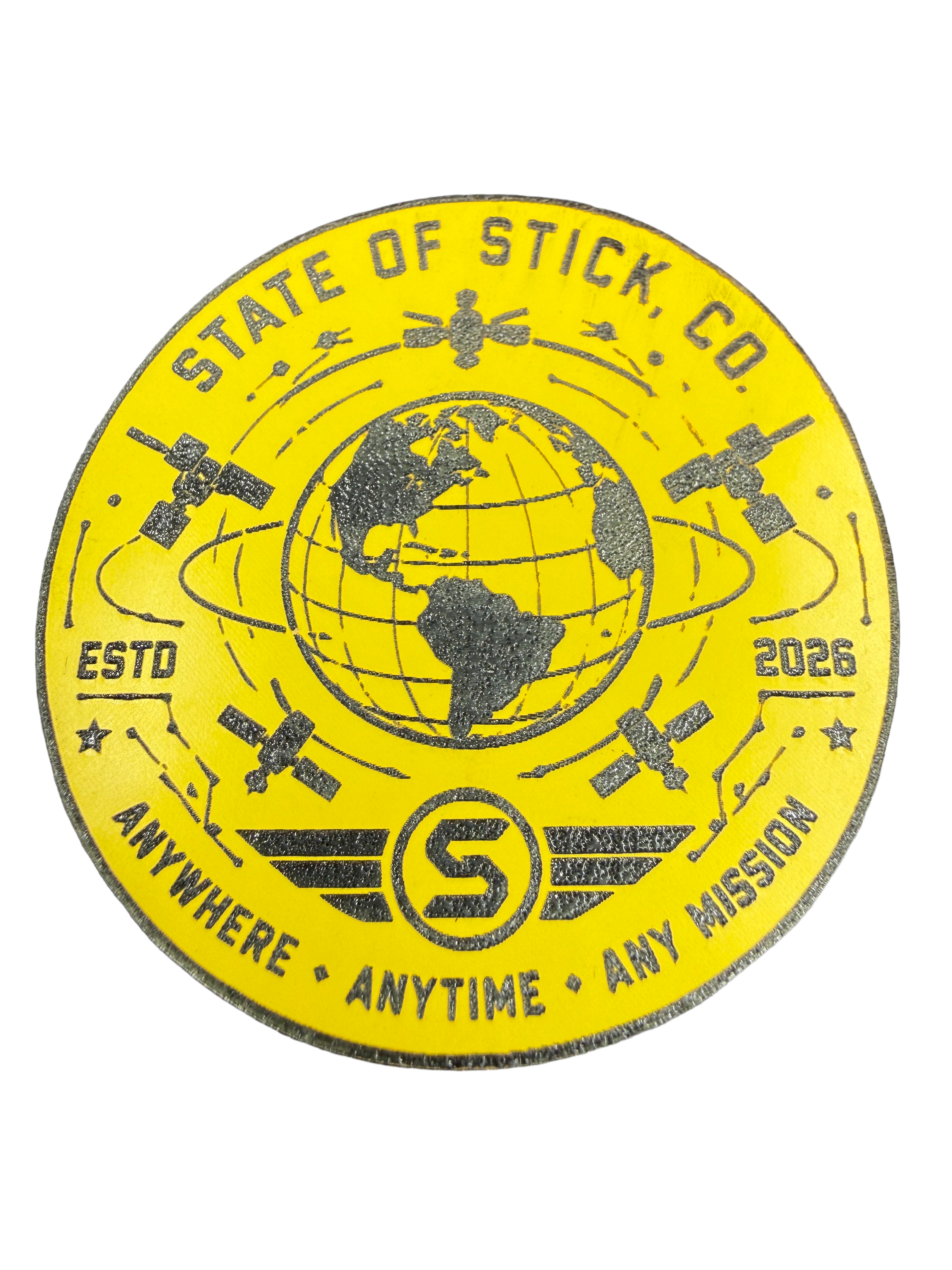
You can see that same pattern in examples we are already building and explaining: the Custom Cauldron case study for connected product storytelling, the Old World Olive Co. concept for specialty food and retail, Defense + Aerospace for authorized physical identity, Manufacturing for product records and service guidance, and Healthcare for carefully bounded education, training, and foundation use cases.
In every case, the best technology does not ask people to believe less carefully. It helps them see more clearly.
Examples already in motion
The same trust pattern shows up across real objects.
These examples are deliberately different from the civic thought experiment above. They show how the platform idea translates into product stories, retail context, and persistent physical records without pretending every use case has the same risk profile.
Trust by Design
One Platform Story, Many Physical Systems
The State of Stick, Co. lens
Physical Trust Should Be Visible
The future I am excited about is not one where every object gets louder. It is one where important objects can carry the right context, the right authority, and the right next step without asking people to guess.
- Identify the objectGive the physical thing a durable relationship to an official record or experience.
- Respect the boundaryCollect only what the purpose requires, and keep private information private.
- Explain the checkTell people what was verified, what was not, and what should happen next.
- Support the humansDesign tools that help workers, owners, customers, or citizens act with confidence.
This is a civic thought experiment, not an announced election product. The point is to explore how trust-centered design can make physical systems easier to understand and harder to misuse.
A Positive Future Is Still Worth Building
It is easy to talk about trust only when it has been broken.
But I think trust is also something we can design for with optimism.
We can make physical systems clearer.
We can make official information easier to find.
We can make provenance and custody easier to explain.
We can build technology that respects privacy instead of quietly consuming it.
We can keep the physical ritual of important moments while making the supporting systems more understandable, more durable, and more accountable.
That is what I kept thinking about after I voted early in Michigan.
Not a replacement for the civic process.
Not a shortcut around public trust.
A reminder that the future of trust will still be physical.
And if we build carefully, it can also be more human.
Keep the trust conversation going
Build The Future Of Physical Trust
State of Stick, Co. helps organizations connect physical products, places, and experiences to trusted digital systems with clear boundaries, useful records, and human-centered design.
For sharing elsewhere: this article is the canonical version. Short summaries on LinkedIn, Medium, Substack, or technical communities should point back here instead of duplicating the full post.